

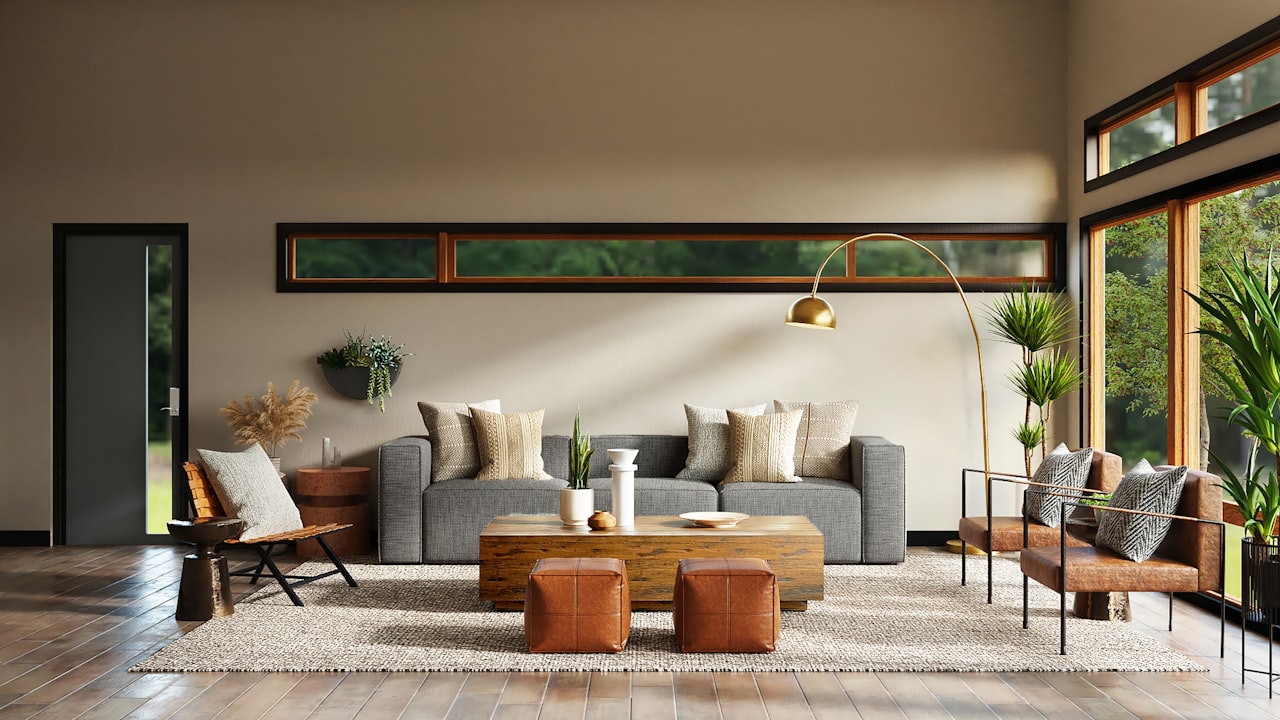
Why the majlis still anchors the Jordanian home
In Amman, the majlis is rarely just another sitting room. It is where you receive a guest who knocked on a Friday afternoon without warning, where the family gathers through Ramadan evenings, and where the dallah and small finjan cups come out for cardamom coffee before anyone talks business. So a good majlis has to do two jobs at once: honour a hosting culture built on generosity, and still feel like a calm, contemporary space the rest of the week. That balance — modern lines meeting traditional warmth — is exactly what a modern majlis design gets right.
The good news is that you do not have to choose between heritage and a clean, current look. Below are the layouts, palettes, and materials we use in Jordanian apartments and villas, with realistic notes on cost and the Amman climate.
Start with the layout: floor seating or raised majlis?
Before colours or fabrics, decide how people will sit. This one decision shapes everything after it.
The continuous floor majlis (jalsa ardhiyya)
The most traditional option is low, continuous seating that runs along the walls in a U-shape and leaves the centre open. It seats the most people — essential for large family aza'im, Eid visits, or a condolence gathering where thirty guests can arrive at once. Modern versions keep the low profile but drop the heavy embroidery: a firm base cushion (farsha) in a plain earthy linen, slim backrests, and a few accent cushions in a heritage weave. Keep the walkway down the middle at least 90 cm wide so serving trays pass easily.
The raised modern majlis
Younger Amman households increasingly prefer a raised majlis: low-slung modular sofas, around 40–45 cm seat height, arranged in the same U or L around a large central table or a stone-topped ottoman. It reads as a contemporary living room but keeps the inclusive, face-to-face seating that conversation and coffee service depend on. Modular pieces are also the smart choice for apartments, because they can be rearranged when you host.
Small apartments: the convertible corner
In a typical Amman apartment where the formal salon doubles as everyday space, a built-in bench (masatib) along two walls with a storage base is the most efficient move. Our workshop builds these to the exact run of the wall, hides winter blankets and floor cushions inside, and tops them with tailored cushions — so a compact room can still seat twelve when relatives drop by.
An earthy palette that belongs to Jordan
The palette winning in 2026 is quiet and natural: sand, greige, taupe, warm cream, olive, and soft clay, lifted with a little brass or muted gold. It flatters Jordan's strong daylight and, conveniently, echoes the stone the country is built from.
Stone that comes from here
Amman is a city of stone, so let the majlis reflect it. Hallabat limestone, quarried north-east of the capital, ranges from pale beige to rose and takes a polished, hammered, or sandblasted finish — beautiful as a single feature wall behind the seating. Local travertine from the Jordan Valley, with its soft cream-to-brown tones, works well as a coffee-table top or a cladded niche for the coffee set. Jordanian and imported marble (Karak and Ma'an limestones, or a Botticino-style marble) suits a fireplace surround or a floor inlay. Using local stone also keeps cost and lead times sensible compared with heavy imports.
Warm wood from the workshop
Wood is what stops an earthy scheme from feeling cold in an Amman winter, when nights at 1,000 m drop close to freezing. Solid oak or walnut for a low table, slatted wood screens (mashrabiya-inspired) to filter light, and built-in oak shelving for the bakhoor burner and coffee set add craft and warmth. Bespoke carpentry lets you match the wood tone to the stone rather than fight it.
Textiles and colour accents
Keep the large upholstery plain and hard-wearing — heavy cotton, a linen weave, or a durable chenille in a neutral — then bring identity through cushions: a Jordanian or Levantine embroidered panel, a subtle geometric, or one deep tone like olive or burgundy. A large, low-pile wool rug both defines the seating and adds essential winter warmth underfoot.
Lighting, warmth, and the details that host well
Layer the light: a dimmable central fixture for gatherings, warm 2700K wall washers to graze that stone wall, and a floor lamp for quiet evenings. Avoid a single harsh ceiling light. Practical details that matter in a real Jordanian majlis: a discreet surface to set the dallah, easy-clean fabrics near where coffee and dates are served, and enough side tables that guests are never reaching. In new builds, underfloor heating beneath a stone or tiled majlis floor is worth the investment for those cold months.
Budgeting your majlis in JOD
Costs vary with size and materials, but as a guide for Amman: re-upholstering or re-covering an existing majlis typically runs from 150–250 JOD upward, depending on fabric. A custom floor majlis (farsha, backrests, and cushions) is usually priced by the running metre, so the wall length drives the number. A feature limestone or travertine wall, a bespoke oak coffee table, and good lighting are where a modern majlis earns its character — and where working with one team that handles finishing, carpentry, and fit-out together keeps the palette coherent and the budget under control.
Bringing it together
A modern majlis for a Jordanian home is not about copying a Gulf showroom. It is about pairing the way we actually host — generous, spontaneous, coffee-first — with the calm, earthy materials Jordan already gives us: local limestone, warm wood, and a natural palette. Get the layout and the stone right, and the room will feel both proudly traditional and genuinely modern. If you would like help planning yours, talk to the Forme One studio in Amman.